
Online Clinical Trainings
Below you'll find links to online training courses for mental health providers to learn about empirically-based, trauma-focused treatments. The NMVC also offers a variety of clinical support services.
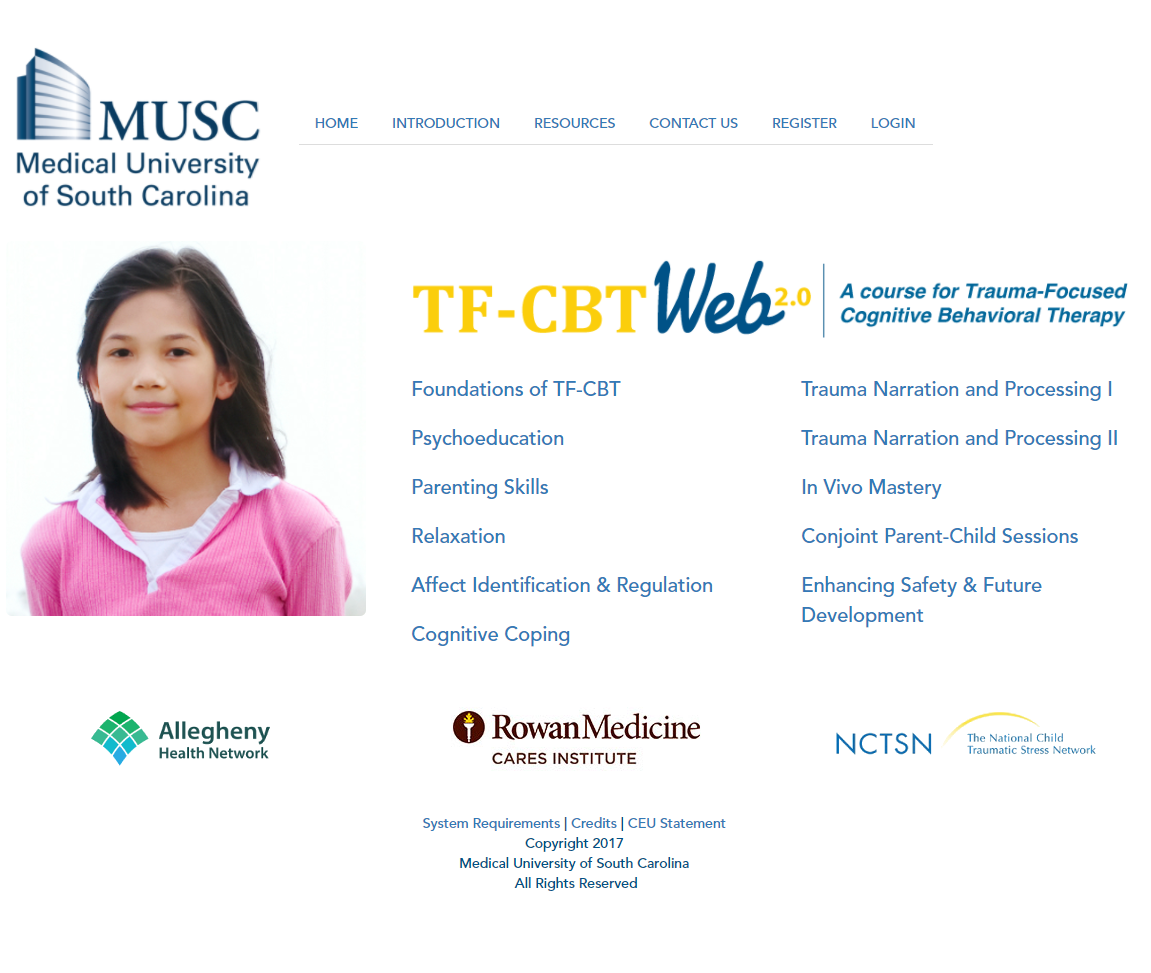
TF-CBTWeb2.0 is an online training course for mental health professionals learning Trauma-Focused Cognitive Behavioral Therapy (TF-CBT), a treatment protocol for children and adolescents suffering from PTSD or PTSD-like symptoms. It was developed in close collaboration with the TF-CBT developers and is comprised of 11 learning modules that cover the foundations of TF-CBT and each of the treatment components. Each module has a concise explanation of the treatment component, video demonstrations of treatment procedures and techniques, and clinical materials and resources. It has a course fee of $35.
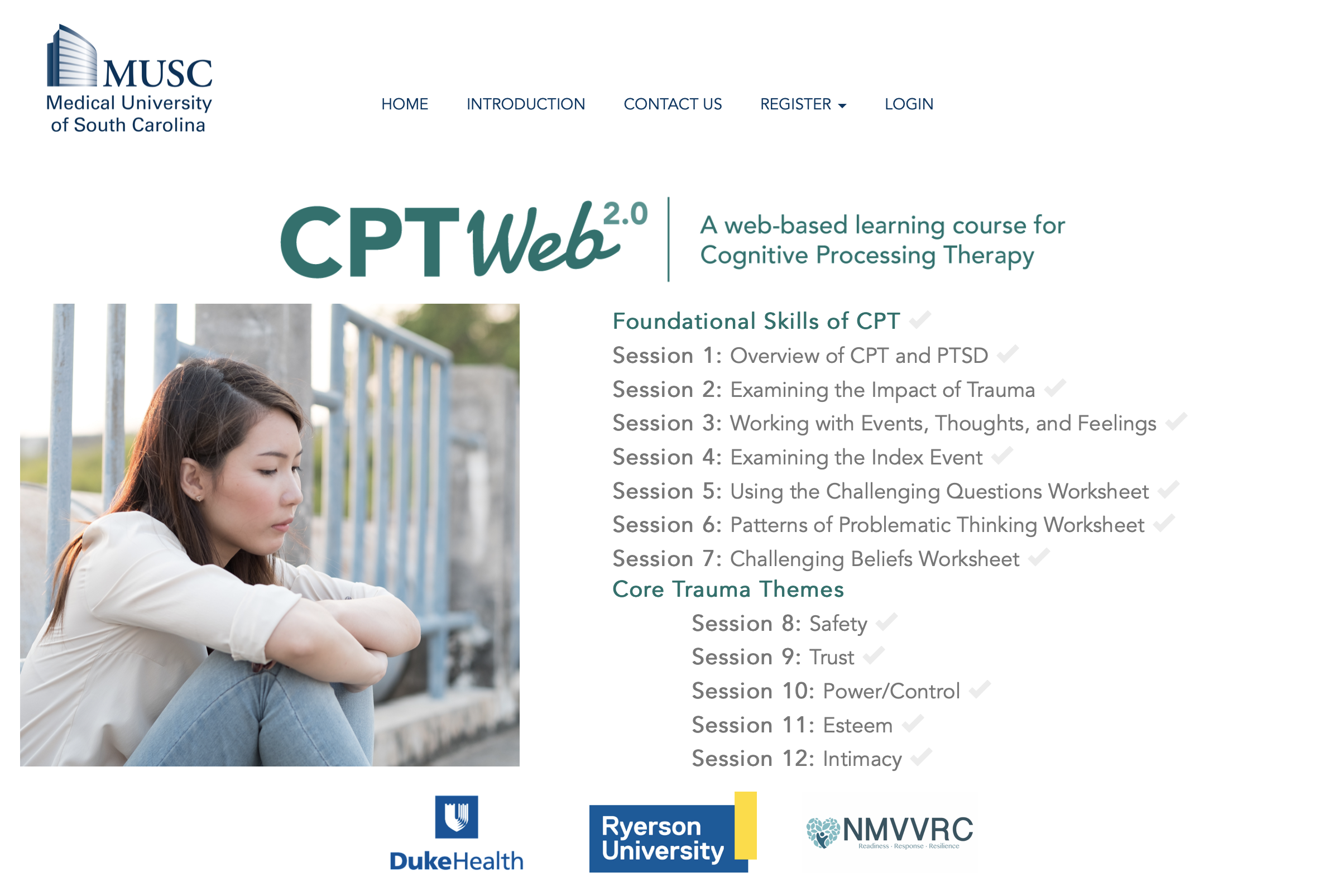
CPTWeb2.0 is an online training course for mental health professionals learning Cognitive Processing Therapy (CPT), a treatment protocol for adults suffering from PTSD or PTSD-like symptoms. It was developed in close collaboration with the CPT developers and is comprised of 13 learning modules that cover the foundations of CPT and each of the treatment components. Each module has a concise explanation of the treatment component, video demonstrations of treatment procedures and techniques, and clinical materials and resources. It has a course fee of $40.

This all-new course for applying TF-CBT to cases of Childhood Traumatic Grief where a child or adolescent has experienced the unexpected/traumatic death of an important person resulting in symptoms of PTSD, depression, grief, and/or behavior problems. CTGWeb2.0 available exclusively to learners who completed TF-CBTWeb2.0. The course contains six modules and has a course fee of $20.
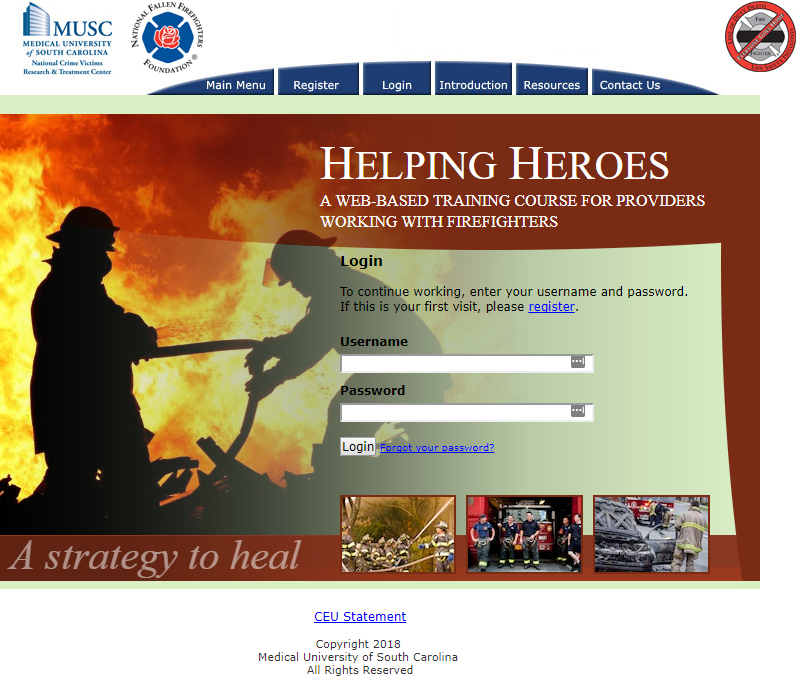
This free online course provides training in Behavioral Activation and Therapeutic Exposure, an integrated treatment approach for first responders with symptoms of depression and PTSD. The course was funded by FEMA through their Fire Prevention and Safety program and therefore focuses primarily on firefighters, but many of the principles and techniques can be applied to a variety of first responder populations.